
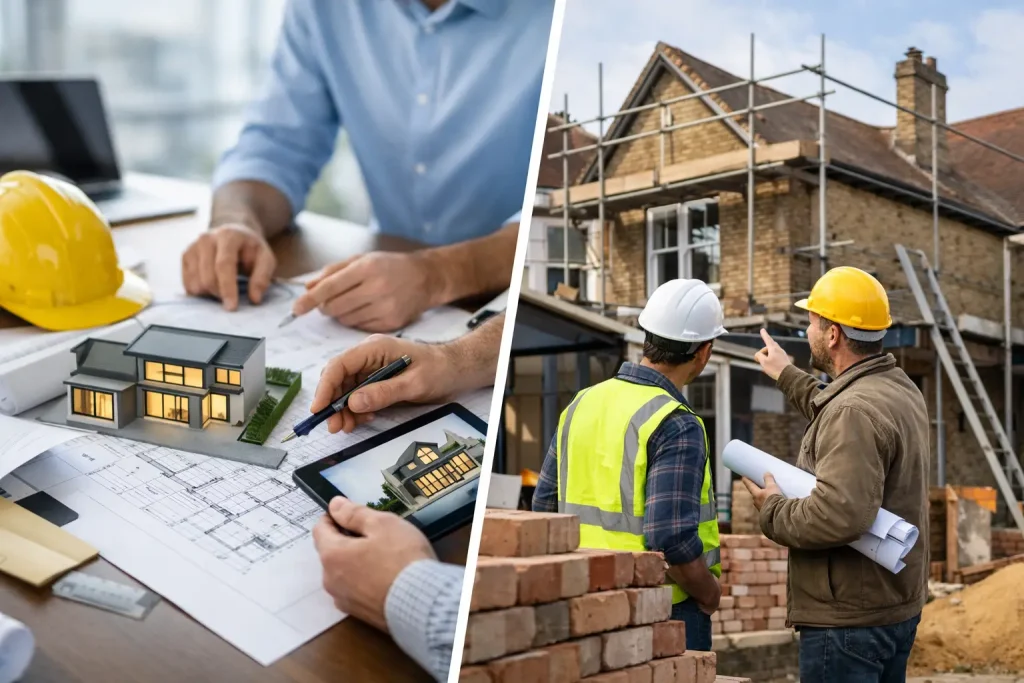
A major home project can appear straightforward on paper: appoint an architect, secure permission, choose a builder and begin work. In practice, the choice between design build vs traditional procurement shapes nearly every part of the experience, from early budgets and design decisions to responsibility on site and the pace of delivery.
For a substantial London refurbishment, extension, listed building restoration or new-build home, there is no universally correct route. The right approach depends on how defined the design is, how much flexibility you need, the complexity of the property and how you prefer decisions to be managed.
What traditional procurement means
Under a traditional route, the client appoints the design team first. This will usually include an architect, structural engineer and, where required, specialists such as a planning consultant, heritage adviser, building services engineer or party wall surveyor. The design is developed in detail before builders are invited to price the work through a tender process.
Once a contractor is appointed, they construct the scheme in accordance with the completed information. The architect or contract administrator commonly retains a central role during the build, assessing progress, administering changes and monitoring whether the works meet the design intent.
This arrangement can work particularly well when the client wants to appoint a specific architect independently and place considerable value on design development before construction begins. It also creates a clear separation between the professional team designing the home and the contractor delivering it.
That separation has benefits, but it can create distance between ambition and buildability. A contractor may not see the project until late in the process, when choices about structural strategy, materials, detailing and access have already been made. If those choices prove difficult or costly to deliver, revisions can follow after tender or once works are under way.
How design and build differs
With design and build, one lead delivery partner takes responsibility for both the design process and construction. The client may begin with an outline brief, initial concept or planning drawings, then work with the contractor and their coordinated design team to develop the project into a fully buildable scheme.
The central advantage is earlier construction input. Cost planning, procurement, sequencing and technical coordination can inform the design as it develops, rather than being considered only after a completed package is issued for tender. This is especially valuable in London homes where access is constrained, existing structures are uncertain and neighbours, party walls or conservation controls add further layers of responsibility.
A well-run design and build process does not mean design quality is compromised for convenience. It should mean that architectural intent, engineering requirements and practical delivery are tested together. The result is a more informed route from concept to completion, with one team accountable for resolving the interfaces between disciplines.
For homeowners, this can also reduce the administrative burden. Rather than coordinating separate appointments across designers, consultants and contractor, the client has a single point of responsibility for the wider programme. Clear reporting and disciplined decision-making remain essential, but the delivery structure is simpler.
Design build vs traditional: the practical differences
The clearest distinction is not whether one route is more premium than the other. Both can deliver exceptional homes. The difference lies in where responsibility sits and when the team begins to address technical and commercial realities.
Design certainty and flexibility
Traditional procurement generally offers more time to refine the design before a contractor is appointed. This suits clients who want every finish, room layout and architectural detail resolved in advance, or who are working with an established architect on a highly individual brief.
Design and build allows the brief to progress alongside detailed technical development. That can be useful where the existing building is likely to reveal surprises, such as concealed structural conditions, ageing drainage or undocumented alterations. It enables the team to respond without losing sight of cost and programme implications.
However, flexibility should not be confused with a lack of definition. A successful design and build project still requires a clear brief, agreed quality benchmark and documented approvals at each stage. Without these, decisions can become reactive and expectations may drift.
Cost control
Traditional tendering can provide useful price competition when the drawings and specification are sufficiently complete. Yet tender figures are only as reliable as the information issued. If important elements are unresolved, contractors will make assumptions, include allowances or price risk. A low initial tender can become less attractive once omissions and changes are accounted for.
In design and build, cost can be reviewed throughout the design process. The team can identify where a proposed detail, product or structural solution is affecting the budget and offer considered alternatives before it is embedded in the construction information. This creates more opportunity for informed choices, rather than cost-cutting after the design has been finalised.
Neither route guarantees a fixed final cost from day one. On period properties in particular, sensible contingency remains part of responsible planning. The key is transparency: a client should understand what is included, what is provisional and what assumptions have been made about the building.
Programme and disruption
Traditional projects often take longer before construction starts because design and tender stages are completed sequentially. This can be worthwhile where the scheme needs extensive planning, heritage or technical development.
Design and build can shorten the overall programme by overlapping certain activities. Long-lead items can be identified earlier, site investigations can inform the developing design and construction planning can begin before every final finish is selected. For families arranging temporary accommodation or seeking to minimise disruption, that coordinated programme can be a material advantage.
Speed should never come at the expense of proper approvals, safety or craftsmanship. A calm project is not simply a fast one. It is one where decisions are made in the right order, materials are procured in time and trades arrive to a site that is ready for their work.
Accountability and quality
A traditional route gives the client separate contractual relationships with the design team and contractor. This can offer independent professional oversight, particularly where the architect is retained to inspect works and administer the contract.
Design and build places primary responsibility with the lead contractor. This reduces the risk of separate parties disputing where a design or construction issue originated, but it makes the choice of partner especially important. Clients should look for evidence of technical expertise, careful design coordination, transparent cost management and meticulous craftsmanship, not simply an attractive proposal.
Quality is protected through detailed scope, samples, mock-ups where appropriate, regular site reporting and a rigorous approach to change control. Procurement route matters, but disciplined management matters just as much.
Special considerations for listed and period homes
For listed buildings and homes within conservation areas, design development cannot be separated from heritage sensitivity. Seemingly modest changes to windows, joinery, internal layouts, fireplaces or historic fabric may require careful research, specialist advice and formal consent.
Traditional procurement can be suitable where a heritage architect is leading a sensitive restoration and the conservation strategy needs to be fully established before works are priced. Design and build can be equally effective when the delivery partner has genuine experience of listed properties and brings conservation, structural and construction expertise into the process from the outset.
The essential question is whether the team can make sound decisions about what to retain, repair and replace. A beautiful finish is not enough if original fabric has been unnecessarily lost or consent conditions have not been properly managed.
Choosing the right route for your project
Traditional procurement may suit a client with a fully formed design, an independently appointed architect and the appetite to manage a broader consultant team. It can be an excellent choice where design development needs to be completed before the market is approached.
Design and build is often well suited to complex refurbishment, extension and reconfiguration projects where buildability, programme and budget need to be considered alongside the design from an early stage. It is particularly valuable when the client wants end-to-end oversight and a more direct line of accountability.
Before choosing, consider how much of the project is known, how much is likely to change once investigations begin and how involved you want to be in coordinating multiple parties. Ask each prospective team how it controls design changes, reports on costs, protects the programme and assures quality on site.
For a home of lasting value, the procurement route should support the level of care the property deserves. The most reassuring choice is the one that gives you clarity at the outset, expert guidance when conditions change and confidence that every detail will be carried through with proper attention.